
01Custom impact and vibration parts
Spec the material to your part. Not your part to the material.
Set the density, stiffness and additives your load case needs. We cast it to your exact geometry and check it with finite element analysis (FEA) before any tooling, then send you a sample to test on your hardware.
One cast part for impact absorption and vibration damping, instead of a stack of off-the-shelf foam layers picked from a supplier catalog.
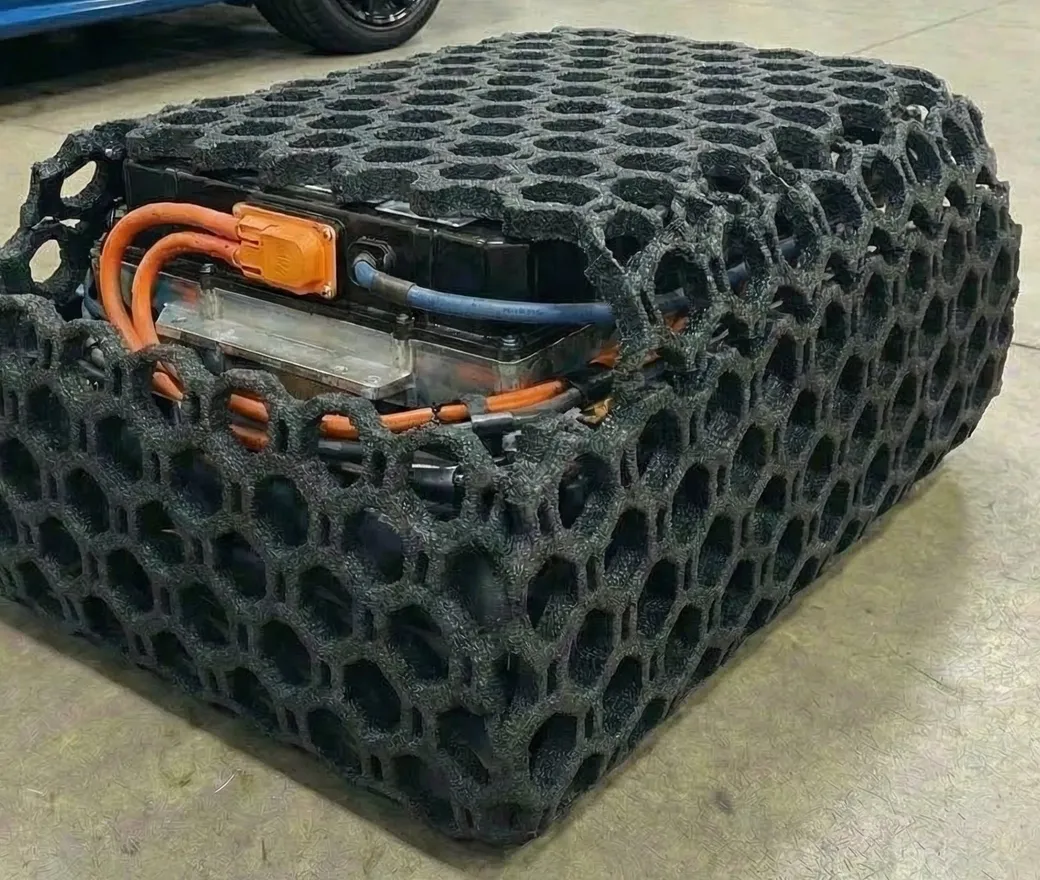
Battery pack wrapped in a cast Super Foam lattice
Energy absorbed per unit volume
Nearly 2x a leading commercial impact foam, 12% lighter (SDSU study, 2020)
Loss in load-bearing capacity
After 7 repeated impacts
Volumetric recovery
After a 25 m/s projectile impact
Lower peak head acceleration
Helmet liner vs closed-cell foam, 1 m drop (SDSU study estimate)
Baseline, not a limit. These are baseline values for our standard formulation, the kind of numbers a conventional material supplier would give you and stop at. They are a starting point, not a limit: we change the additive loading and cast the part to your geometry, so your part’s performance is tuned to your targets and will differ from these figures.
Full comparison and test conditionsData sheets
Get a data sheet written for your part.
A catalog data sheet describes one material that every customer buys. Yours starts from our tested baseline and is tuned to your load case: density, additives, thickness and geometry. Our engineers review every sheet before it is released to you.
-
01
Create a free account
Sign in with your Google account. Your requirements stay confidential.
-
02
Describe the part
Load case, impact or vibration levels, temperature range, envelope and the standards you need to meet. Rough numbers are fine.
-
03
Download your data sheet
Once our engineers approve it, it appears in your dashboard as a PDF. Anything we have not tested yet, we answer with you in a short call.
Custom data sheets are engineering estimates until your part is simulated and tested.
02You set the targets
Four controls. All yours.
A catalog foam gives you one density and one behavior, and your design adapts to it. Our published numbers are only the baseline. Tell us the load case, and set these four controls to tune the material to your part.
Density
Low, medium or high (about 100 to 355 kg/m³)
Sets stiffness and how much energy each hit absorbs. Lower density gives a softer stop and lower peak force; higher density carries more load and resists bottoming out.
Additives
Fire retardant, antibacterial, electrostatic dissipative, thermal
Built into the formula, not coated on. Add what the environment demands, without stacking a second material.
Geometry
Cast to your CAD: solid, cored or lattice
The part is cast to shape around your hardware, so load paths, mounting points and clearances follow your design instead of a sheet stock thickness.
Thickness
Set by your stroke and envelope
Controls deceleration distance. Thicker sections lower peak transmitted force; thinner sections save space and mass. FEA finds the balance before tooling.
03The material
Not foam. Not rubber. A microcellular elastomer.
It looks like foam, so it gets compared to foam. It behaves like an engineered elastomer, and it should be specified like one.
EPS, EVA, PE
Commodity foam
- Light
- Crushes on the first serious hit
- Cut from a sheet in one density
Rubber, cast urethane
Solid elastomer
- Tough and recovers
- Heavy and nearly incompressible
- Little room to absorb a strike
Super Foam polyurea
Microcellular elastomer
- Light, with fine cells throughout
- Recovers after impact after impact
- Cast to the shape of your part, formulated to your targets
Searching for a foam replacement? You’re in the right place. This is what we replace it with.
04The problem
Off-the-shelf foam is a fixed compromise.
A datasheet tells you what a sheet already does. It cannot change it to fit your part.
Off-the-shelf foam
Off-the-shelf EPS or EVA comes with a preset behavior. When it is not right for the job, teams add layers, glue materials together, or accept the tradeoff.
A material spec written for the part
Start with the property target, then make one protective part around the hardware.
Off-the-shelf foam brings one density and one behavior. A better starting point is the part itself: the impact energy it must absorb, the vibration it must isolate, the temperature and flame requirements, and the envelope it has to fit.
Super Foam turns those requirements into one cast part.
05Property explorer
Pick the properties your part needs.
Each property is a lever in the formula. Choose the ones your load case and environment call for.
Impact
Set the impact energy, drop height or strike your part must survive, and the peak force or g level it must stay under.
Baseline, standard formulation: 71.7 kJ/m³ absorbed, nearly twice a leading commercial impact foam at 12% lower weight (SDSU study, 2020); under 20% loss in load-bearing capacity after 7 impacts. Your part is tuned from here.
Flame retardancy
Add a fire retardant to the formula when the part sits near cells, motors or heat sources.
Built into the material. Flammability rating is confirmed for your part during qualification.
Antibacterial surface
For parts that touch people or shared equipment, add an antibacterial additive to the formula.
Built into the material. Validation follows your use environment.
Electrostatic dissipation
For parts around sensitive electronics, add an electrostatic dissipative additive so charge bleeds off instead of building up.
Built into the material. Surface resistivity is confirmed for your part during qualification.
Thermal resistance
Give us the operating and storage temperature range and we tune the formula to hold its properties across it.
Confirmed for your part during qualification.
Vibration isolation
Geometry and surface features tuned to isolate a target frequency band or hold hardware steady under vibration.
Working in our lab now. Share your frequency range and mass and we will tell you what we can test today.
06How we work
Four steps from idea to sample.
Formulate, apply, simulate, then hold the part in your hands.
Find the step you’re on-
01Formulate
Create your own chemistry.
Tell us what the part must survive (impact, flame, heat, static, weight) and we turn those targets into a polyurea formula that is yours.
-
02Apply
Apply it to your part.
Your formula is cast into the geometry of your part. One protective piece instead of a stack of off-the-shelf foam layers.
-
03Simulate
Test it against the real world.
Our finite element analysis (FEA) simulator puts your part through the real-world drops, strikes and vibration it will face, before anything is made. Simulation is an inexpensive way to test how the material will behave in environmental conditions it has not been tested in yet, which fits our mission: material and part development that hardware startups can afford.
-
04Order
Order a sample.
Get a physical sample to test on your own hardware before you commit. It’s cast on our own patent-pending automated machine, the same one built to run your production orders.
07Use cases
Built for hardware that takes a hit.
From drone bodies to battery trays, see the material in internal demonstrations.
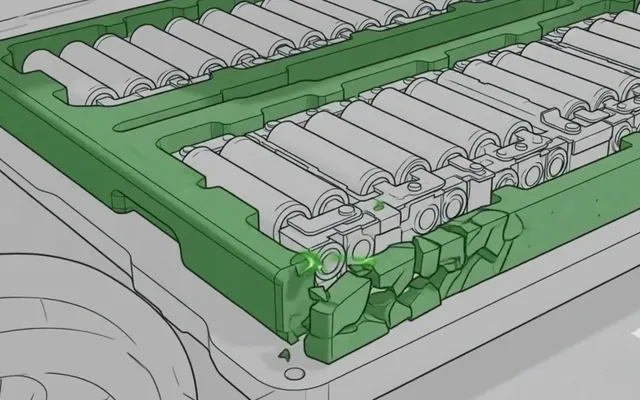 Battery systems
EV passenger battery protection
Concept for a single cast battery tray that absorbs impact energy before it reaches the cells. Internal demonstration; crash performance is qualified for each vehicle program.
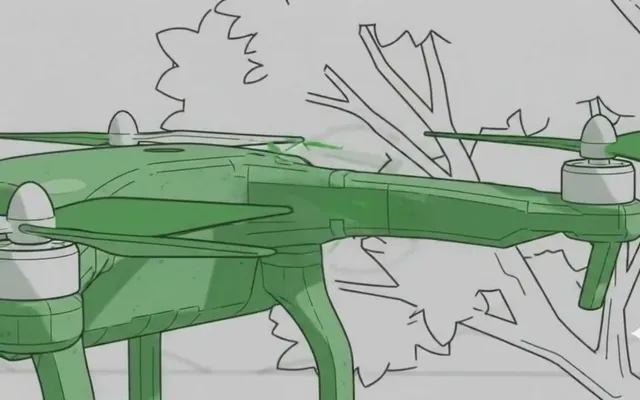 Drones and robotics
Drone body protection
A drone body cast in our elastomer in place of a multi-part assembly. In this demonstration it takes the impact, recovers its shape and keeps flying.
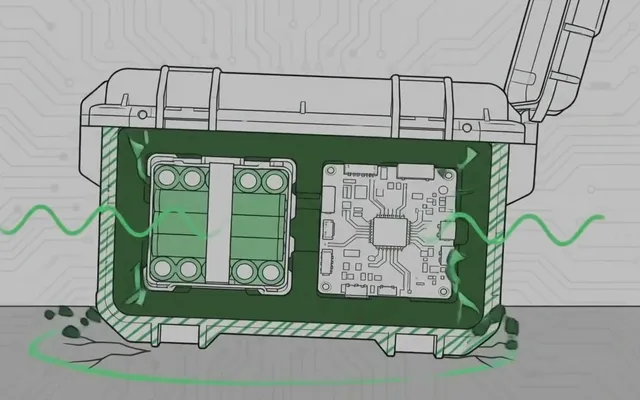 Battery systems
Portable battery unit protection
Impact protection for portable battery units that get dropped, thrown in vehicles and carried in the field.
08Proof
Customer stories
Where is our material being used right now?
Customer stories
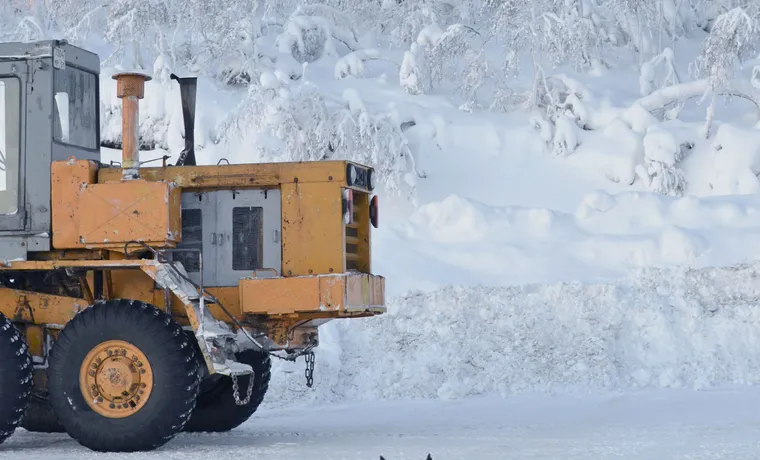 Customer · order placed
Battery systems · extreme cold
Helicoid
Vibration-dampening case corners for battery boxes used in extreme cold.
- The challenge
- Battery boxes deployed in extreme cold take constant vibration and knocks, and cold makes many protective materials stiff and brittle just when they’re needed.
- What we’re doing
- Case corners cast from a formulation selected for extreme-cold use, dampening vibration around the battery box.
 Active pilot
Autonomous logistics
Glīd
Protecting sensors, compute and a soft-landing pad on the GliderM autonomous truck.
- The challenge
- Glīd’s GliderM truck carries sensitive sensors and a compute unit, and has to set a shipping container down without a jarring impact.
- What we’re doing
- Protective parts for the sensors and compute unit, plus a landing pad that cushions the soft loading of a shipping container onto the GliderM.
 Active pilot
Military & emergency power
New Use Energy
Protecting portable lithium-ion power banks built for military and emergency use.
- The challenge
- Portable power banks for the field get dropped, thrown in vehicles and carried into disaster zones, and they still have to work.
- What we’re doing
- Impact protection for the lithium-ion batteries and the compute units inside each power bank.
Where each capability stands
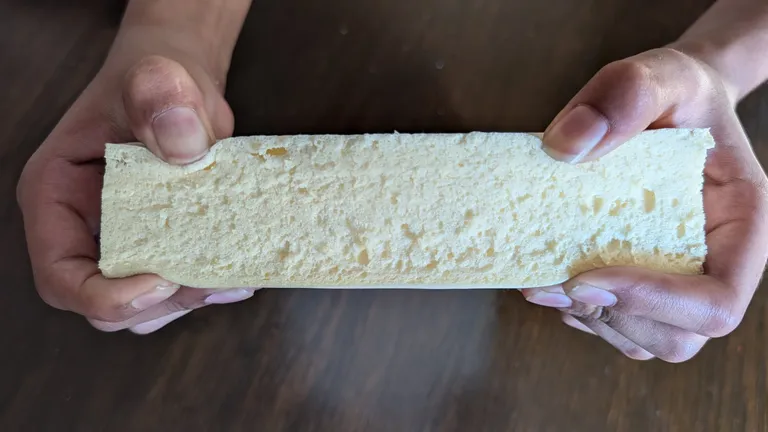
Baseline performance
Our standard formulation absorbed 71.7 kJ/m³ in an SDSU study, nearly twice a leading commercial impact foam at 12% lower weight, with up to 99% shape recovery within milliseconds. That is the baseline; your part is formulated and shaped to beat it for your load case.
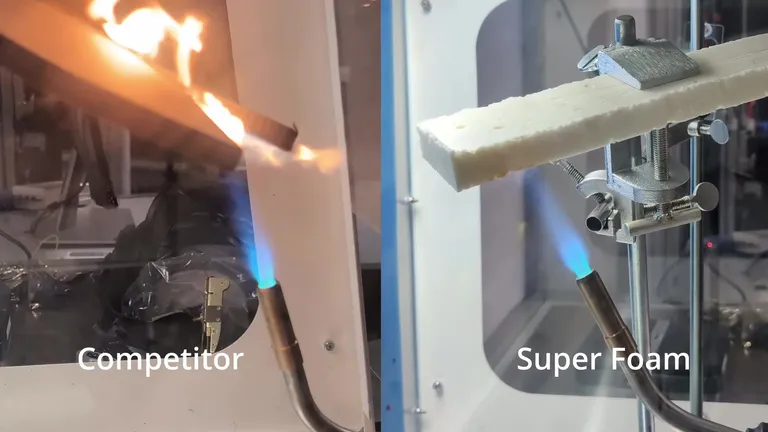
Qualified to your part
Every application is validated against its own load case and standard, not a generic claim.
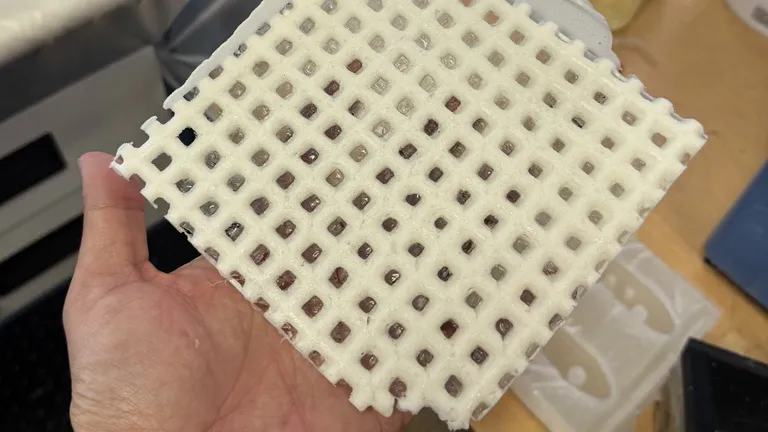
Shape customization
Geometry tuning for vibration and mounting is working in our lab and moving toward production tooling.
09Origin & IP
Protected science. Protected process.
We are a deep tech startup commercializing institutional knowledge based on decades of research.
Material
Patent granted
The core polyurea material is covered by a granted patent. It originated at San Diego State University, and Super Foam holds the exclusive license to commercialize it.
Automated production machine
Patent pending
Our automated production machine is our own invention. The patent application is filed and pending.
10Start a part spec
Tell us your load case. We will spec the part.
Share the impact or vibration your part must handle, the envelope it has to fit, and the environment it works in. We reply with a material spec, a simulation plan and the next step to a sample.